doi: 10.56294/sctconf2024.1123
Categoría: Finance, Business, Management, Economics and Accounting
ORIGINAL
Navigating the digital frontier: the transformative influence of information technologies on Kerala’s tourism sector
Navegando por la frontera digital: la influencia transformadora de las tecnologías de la información en el sector turístico de Kerala
Arun
Prem1  *, Velmurugan V. P2
*
*, Velmurugan V. P2
*
1Research Scholar, Management Studies, Noorul Islam Centre for Higher Education, Kanyakumari (Dist.), Tamil Nadu – India.
2 Associate Professor, Faculty of Management Studies, Noorul Islam Centre for Higher Education, Kanyakumari (Dist.), Tamil Nadu – India.
Cite as: Prem A, Velmurugan VP. Navigating The Digital Frontier: The Transformative Influence Of Information Technologies On Kerala’s Tourism Sector. Salud, Ciencia y Tecnología - Serie de Conferencias. 2024; 3:.1123. https://doi.org/10.56294/sctconf2024.1123
Submitted: 05-02-2024 Revised: 17-05-2024 Accepted: 01-09-2024 Published: 02-09-2024
Editor: Dr.
William Castillo-González 
Corresponding author: Arun Prem *
ABSTRACT
Introduction: information technology(IT) have fundamentally reshaped Kerala’s tourism, serving as a catalyst for positive change by influencing travel preferences, transforming socio-cultural dynamics, and driving eco-friendly initiatives in this vibrant Indian state. This study explores the transformative influence of IT on Kerala’s tourism sector, addressing objectives such as evaluating Its role in shaping tourist behavior, investigating socio-cultural impacts, analyzing environmental sustainability practices, and proposing strategies to tackle emerging cybersecurity challenges.
Methods: employing a mixed-methods approach, the study integrates quantitative surveys, qualitative interviews, and regression analyses across three key participant groups: tourists, local communities, and IT professionals.
Result: findings reveal a strong correlation between IT adoption and tourist behaviors, positive socio-cultural impacts tempered by concerns, significant contributions to environmental sustainability, and moderate cybersecurity challenges.
Conclusions: the study proposes strategies encompassing awareness campaigns, robust cybersecurity measures, and the formation of a cybersecurity task force. Ultimately, the research contributes to scholarly knowledge and informs practical strategies for stakeholders in Kerala’s tourism sector.
Keywords: Information Technologies; Tourism; Socio-Cultural Impacts; Environmental Sustainability; Cybersecurity Challenges; Kerala.
RESUMEN
Introducción: la tecnología de la información (TI) ha remodelado fundamentalmente el turismo de Kerala, sirviendo como catalizador para un cambio positivo al influir en las preferencias de viaje, transformar la dinámica sociocultural e impulsar iniciativas ecológicas en este vibrante estado indio. Este estudio explora la influencia transformadora de las TI en el sector turístico de Kerala, abordando objetivos como evaluar su papel en la configuración del comportamiento turístico, investigar los impactos socioculturales, analizar las prácticas de sostenibilidad ambiental y proponer estrategias para abordar los desafíos emergentes de ciberseguridad.
Método: empleando un enfoque de métodos mixtos, el estudio integra encuestas cuantitativas, entrevistascualitativas y análisis de regresión en tres grupos clave de participantes: turistas, comunidades locales y profesionales de TI.
Resultados: los hallazgos revelan una fuerte correlación entre la adopción de TI y los comportamientos turísticos, impactos socioculturales positivos atenuados por preocupaciones, contribuciones significativas a la sostenibilidad ambiental y desafíos moderados de ciberseguridad.
Conclusiones: el estudio propone estrategias que abarcan campañas de concientización, medidas sólidas de ciberseguridad y la formación de un grupo de trabajo sobre ciberseguridad. En última instancia, la investigación contribuye al conocimiento académico e informa estrategias prácticas para las partes interesadas en el sector turístico de Kerala.
Palabras clave: Tecnologías de la Información; Turismo; Impactos Socioculturales; Sostenibilidad Ambiental; Desafíos de Ciberseguridad; Kerala.
INTRODUCTION
Tourism stands out as a promising sector in India with the potential for substantial growth, leveraging the nation’s success in the services industry. According to the World Economic Forum’s Travel and Tourism Competitiveness Report, India is recognized among the top 10 destinations globally for its natural and cultural attractions. Contributing significantly to the economy, the tourism industry constitutes the largest service sector, contributing 6.23 percent to the GDP and generating 8.78 percent of total employment in India.(7) Notably, the Ministry of Tourism reports a continuous increase in foreign tourist arrivals, growing from 2.54 million in 2001 to 6.58 million in 2012.
In this context, the tourism sector has emerged as a pioneer in integrating information and communication technologies (ICT), with Information Technology (IT) playing a pivotal role in its evolution. Early applications, such as Computerised Reservation Systems (CRS), heralded the beginning of IT in global industry. The tourism industry’s success in e-commerce is due to its consumer-centric character, which revolves around service and information provision. Tourism, which is recognized as a hybrid business by specialists such as Werthner and Klein [14], requires the seamless integration of information and physical services, necessitating variable configurations of both components. This integration is facilitated by ICT, which allows tourism offerings to be customized to meet individual demands.
IT’s revolutionary impact on Kerala’s tourism sector is obvious in the dramatic changes it has brought to tourist behaviour, socio-cultural dynamics, and environmental sustainability practices. From molding travel tastes through innovative online booking systems to promoting cultural preservation and eco-friendly efforts, IT has emerged as a positive change agent, transforming the tourist environment in this lively Indian state.
Effect of ICT in tourism management
With evolving consumer behavior, the tourism market is witnessing increased segmentation, demanding a proactive response from operators. Addressing this challenge, tourism operators must provide accurate, localized data, predominantly through IT channels, while simultaneously nurturing enduring relationships with tourists. Rather than a mere transactional focus, there is a growing emphasis on fostering long-term connections, where IT can contribute significantly to relationship building in the tourism industry.(13,18) Top of Form
ICT has globally transformed the industry landscape by providing a myriad of opportunities for expanding the operational horizons of tourism service providers, as highlighted by several scholars.(4,8,11,15) It serves as a crucial tool that offers advantages in promoting and fortifying the strategies and operations of tourism firms. Shanker(10) rightly notes that ICT plays a strategic role in restructuring the value chain and organizational operations. The utilization of ICT for managing organizational functions, as explored by Bordonaba‐Juste et al.(2), Buhalis&O’Connor,(5) and Yoo &Gretzel,(16) is well-established. Buhalis’s research(3) extensively discusses how ICT enhances cooperation and control functions in organizational activities, contributing to effective decision-making. In an empirical study, Zaidan(17) observes that ICT not only expands business scope but also facilitates service customization according to client needs, ensuring effective collaboration with customers and suppliers.
Literature survey
Onan(9) researched the strategic management process, underscoring the vital role of Information and Communication Technology (ICT) applications in formulating, selecting, evaluating, controlling, and implementing strategies. The study emphasized ICT’s coordination among stakeholders and business units, using tools like sales forecasting applications, yield management tools, property management systems, and decision support systems. It recommended strategically integrating ICT for efficient market service, overall efficiency, and enhanced profitability. In a systematic literature review, Cai et al.(6) analyzed 314 papers on technology in tourism, categorizing organizational perspectives into corporate/management support, competitive information management, and strategic information systems. While many studies focused on the consumer viewpoint, covering expectations, behaviors, attitudes, and diverse applications, the authors highlighted a scarcity of research on technology adoption from an organizational standpoint. They urged further exploration in areas like office automation, end-user applications, operational aspects, and telecommuting.
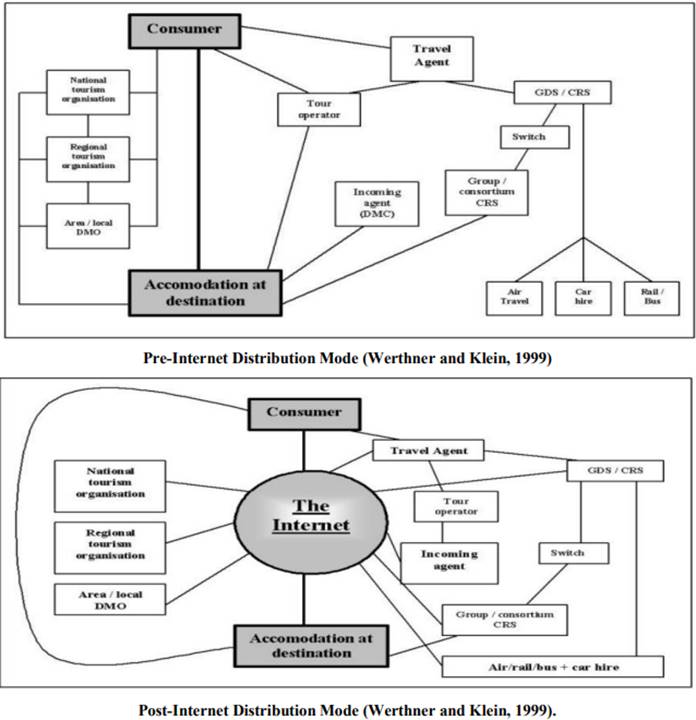
Figura 1. Evolution of Tourism and Hospitality Distribution Channels with the Arrival of Internet(14)
In a study by Zaidan(17) on travel agents in Dubai, the internet was crucial for tailoring services, customer attraction, and engagement, with a focus on providing information and dynamic communication through extensive email use. E-commerce adoption played a pivotal role in enhancing global reputations, contributing to increased sales, revenues, and overall profit growth. However, challenges such as limited resources, online security concerns, and a lack of IT skills were identified. Tichaawa’s(12) research highlighted the significant potential of various ICT, including wireless internet and smartphone applications, in enhancing the performance of diverse tourism businesses like hotels, bed and breakfasts (B & Bs), backpackers, travel agencies, and tour guide companies. Travel agents experienced the most substantial impact from ICT, leading to heightened competitiveness, accelerated service delivery, and expanded market share. The key takeaway emphasized the crucial role of incorporating ICT into business practices for overall performance enhancement.
Yoo and Gretzel(16) delved into the impact of ICT on marketing functions in tourist experiences, emphasizing the increasing significance of web-based applications, social media, mobile technologies, smart devices, location-based services, and virtual and augmented reality. Case studies on Philadelphia Tourism, Snapchat, and the Royal Ontario Museum illustrated effective IT-based marketing strategies, advocating for a mindset shift among marketers towards technology, innovation, and creativity to enhance the overall tourist experience. Ashari et al.(1) highlighted the rapid advancements in ICT, particularly the internet, transforming the tourism business landscape into a knowledge industry. They underscored the internet’s pivotal role in strategy formulation and information processing, despite persistent barriers such as psychological apprehensions and safety concerns. ICT emerges as a crucial driver, facilitating the redevelopment or restructuring of products and services in the tourism sector.
OBJECTIVES
· Evaluate the role of IT in shaping tourist behavior and preferences in Kerala.
· Investigate the influence of IT on the socio-cultural aspects of Kerala’s tourism, exploring its implications for local communities.
· Analyze the environmental sustainability practices enabled by IT adoption in the tourism industry in Kerala.
· Propose strategies to address emerging cybersecurity challenges specific to IT integration in Kerala’s tourism, ensuring a secure digital environment.
METHOD
Research Design
For evaluating the multidimensional impact of IT on Kerala tourism sector, a mixed-method technique was employed in this research.
Data Collection
Quantitative Data: Surveys will be disseminated to tourists, local populations, and IT experts to determine the role of IT in affecting tourist behavior, socio-cultural consequences, and environmental sustainability practices. Validated scales and structured questions will be used in the survey instruments, with data collected both online and on-site.
Qualitative Data: Representatives from each group will participate in in-depth interviews and focus group discussions to acquire a better understanding of their opinions and experiences with IT in Kerala tourism. Open-ended inquiries will allow for a more nuanced investigation of socio-cultural and environmental issues.
Data Analysis
Quantitative Analysis: It measures the amount or concentration of a specific component or element in a sample.
Qualitative Analysis: The technique is used to determine the presence or absence of specific chemical components or constituents in samples. This technique is commonly used in organic chemistry to identify unknown compounds.
Limitations of the Study
Despite the wide sample, it is acknowledged that the representation of stakeholders in Kerala’s tourism may not cover the complete spectrum, potentially limiting the study’s generalizability.
Ethical Considerations
The study will adhere to ethical guidelines, ensuring informed consent, confidentiality, and privacy for all participants. Ethical approval will be obtained from relevant institutional review boards before data collection begins.
Strategies for Cybersecurity
The study will propose practical strategies for addressing emerging cybersecurity challenges, incorporating insights from both qualitative and quantitative data. These strategies will focus on safeguarding digital environments and ensuring the secure integration of IT in the tourism sector.
Dissemination
Research findings will be disseminated through academic publications, industry reports, and presentations, contributing to scholarly knowledge and informing practical strategies for stakeholders in Kerala’s tourism sector.
RESULTS
Demographic analysis
The study encompasses three primary groups: tourists visiting Kerala, local communities engaged in tourism-related activities, and IT professionals involved in the tourism industry. The sample size for each group is approximately 400 individuals, ensuring a diverse and representative dataset. The demographic statistics include frequency and percentage distributions for key variables within each group. The demographic statistics, presented in table 1, highlighted key variables such as gender, age group, nationality, IT adoption level, occupation, and perceived socio-cultural impact.
|
Table 1. Demographic distribution |
|||
|
Variables |
Frequency |
Percentage |
|
|
Tourists: |
|
|
|
|
Gender |
Male |
220 |
55 % |
|
Female |
180 |
45 % |
|
|
Age group |
18-25 |
90 |
22,5 % |
|
26-35 |
150 |
37,5 % |
|
|
36-50 |
100 |
25 % |
|
|
51 & above |
60 |
15 % |
|
|
Nationality |
Domestic tourists |
250 |
62,5 % |
|
International tourists |
150 |
37,5 % |
|
|
IT Adoption Level |
Low |
50 |
12,5 % |
|
Moderate |
200 |
50 % |
|
|
High |
150 |
37.5 % |
|
|
Local Communities: |
|
|
|
|
Occupation |
Traditional Artisans |
120 |
30 |
|
Service Industry |
100 |
25 |
|
|
Agriculture |
80 |
20 |
|
|
Others |
100 |
25 |
|
|
Age Group |
18-30 years |
150 |
37,5 % |
|
31-45 years |
120 |
30 % |
|
|
46-60 years |
80 |
20 % |
|
|
61 and above |
50 |
12,5 % |
|
|
Perceived Socio-cultural Impact |
Positive |
250 |
62,5 % |
|
Neutral |
80 |
20 % |
|
|
Negative |
70 |
17,5 % |
|
|
IT Professionals: |
|
|
|
|
Sector |
Software Development |
180 |
45 % |
|
Cybersecurity |
100 |
25 % |
|
|
Data Analytics |
70 |
17,5 % |
|
|
IT Management |
50 |
12,5 % |
|
|
Experience in the Tourism Industry |
Less than 2 years |
80 |
20 % |
|
2-5 years |
150 |
37,5 % |
|
|
6-10 years |
100 |
25 % |
|
|
More than 10 years |
70 |
17,5 % |
|
|
Cybersecurity Awareness |
Low |
30 |
7,5 % |
|
Moderate |
180 |
45 % |
|
|
High |
190 |
47,5 % |
|
In the tourist group, there is a balanced gender representation, with 55 % male and 45 % female participants. The age distribution shows a diverse range, with the majority falling in the 26-35 age group (37,5 %). Domestic tourists constitute a larger portion (62,5 %) compared to international tourists (37,5 %). Regarding IT adoption levels among tourists, the majority fall into the moderate category (50 %), indicating a substantial reliance on IT for travel-related activities.
In the local community’s group, the distribution is segmented based on occupation and age. Traditional artisans constitute 30 %, reflecting the presence of individuals involved in preserving traditional crafts. The service industry and agriculture are also represented, each contributing 25 % to the sample. The age distribution is varied, with a significant proportion in the 18-30 age group (37,5 %). The perceived socio-cultural impact among local communities is predominantly positive, with 62,5 % expressing a positive outlook, 20 % remaining neutral, and 17,5 % perceiving negative impacts. This indicates a largely positive opinion of the socio-cultural ramifications of tourism-related information technology.
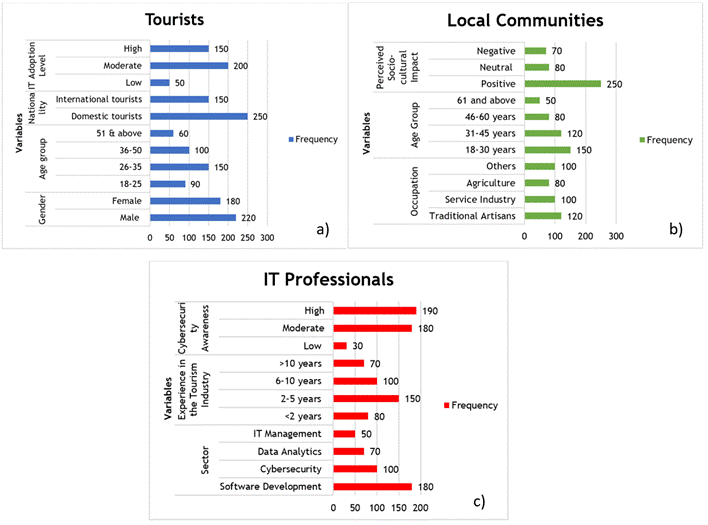
Figura 2. Graphical representation of demographic traits of (a) Tourists (b) Local communities (c) IT professionals
IT workers work in a variety of fields, the most common of which being software development (45 %). The distribution of experience in the tourism business is fairly balanced, with each group accounting for a sizable share of the sample. Cybersecurity awareness is evenly spread, with 7,5 % having poor awareness, 45 % having moderate knowledge, and 47,5 % displaying high awareness. This demonstrates a significant level of awareness among IT experts about cybersecurity precautions in the tourism industry.
These demographic numbers provide a sense of the different participant profiles within each group, establishing the groundwork for a thorough examination of IT’s multidimensional impact on Kerala’s tourism industry.
Quantitative Analysis
Tourist Behavior and Preferences
The study used descriptive statistics and correlation analysis to investigate tourist behavior and preferences.
|
Table 2. Descriptive Statistics |
||
|
Variable |
Mean ( %) |
Standard Deviation |
|
IT for Trip Planning |
75 |
10 |
|
Online Booking Rates |
85 |
8 |
|
Influence of Online Reviews |
70 |
12 |
Table 2 offers descriptive statistics that provide valuable insights into visitor behaviour and IT adoption decisions. Tourists rely substantially on IT for trip preparation, with a mean of 75 % and a relatively low standard deviation of 10 %, indicating a consistent tendency among respondents. Furthermore, internet booking rates have a higher mean of 85 %, indicating that tourists prefer to use IT for booking purposes. Online reviews influence visitor decisions significantly, with a mean of 70 % and a standard deviation of 12 %.
|
Table 3. Correlation Analysis |
|||
|
Variable 1 |
Variable 2 |
Correlation Coefficient |
p-value |
|
IT for Trip Planning |
Online Booking Rates |
0,60 |
<0,001 |
|
IT for Trip Planning |
Influence of Online Reviews |
0,45 |
0,005 |
|
Online Booking Rates |
Influence of Online Reviews |
0,55 |
<0,001 |
In table 3, the correlation analysis provides valuable information about the relationships between these variables. Additionally, a strong positive correlation of 0,55 (p < 0,001) is observed between online booking rates and the influence of online reviews, implying that tourists who engage in online bookings are also more likely to be influenced by online reviews. These findings collectively underscore the interconnected nature of IT adoption, online booking behavior, and the impact of online reviews on tourists’ decision-making processes.
Socio-cultural Aspects
Thematic analysis was conducted to extract patterns and themes from qualitative data obtained through interviews and focus group discussions. As shown in table 4, positive and negative themes related to cultural impact, changes in traditions, and community engagement were identified. Quantitative analysis (table 5) complemented the qualitative insights, providing mean Likert scale values and standard deviations for perceptions of cultural impact, attitudes towards changes in traditions, and community engagement facilitated by IT.
|
Table 4. Thematic Analysis |
||||
|
Factors |
Positive Themes |
Percentage |
Negative Themes |
Percentage |
|
Cultural Impact |
Cultural exchange, exposure |
76 % |
Concerns about cultural dilution |
24 % |
|
Changes in Traditions |
Embracing modernity |
62 % |
Fear of tradition erosion |
38 % |
|
Community Engagement |
Enhanced connectivity |
80 % |
Perceived loss of local identity |
20 % |
The thematic analysis of qualitative data revealed distinct patterns in the socio-cultural aspects impacted by IT in Kerala’s tourism. The positive themes predominantly included cultural exchange and exposure, embraced by 76 % of respondents. However, 24 % expressed concerns about potential cultural dilution. In terms of changes in traditions, 62 % acknowledged the positive aspect of embracing modernity, while 38 % harbored fears of tradition erosion. Regarding community engagement, 80 % highlighted enhanced connectivity as a positive outcome, while 20 % perceived a loss of local identity.
|
Table 5. Quantitative Analysis |
||
|
Component |
Mean (Likert Scale) |
Standard Deviation |
|
Perception of Cultural Impact due to IT in Tourism |
3,7 |
1,0 |
|
Attitude towards Changes in Traditions |
4,0 |
1,2 |
|
Community Engagement Facilitated by IT in Tourism |
3,5 |
1,1 |
The quantitative analysis, presented in table 5, further substantiated these qualitative insights. On a Likert scale, the mean perception of cultural impact due to IT in tourism was 3,7, suggesting a generally positive but moderately impactful influence. Attitudes towards changes in traditions scored a mean of 4,0, indicating a more favorable outlook. Community engagement facilitated by IT received a mean of 3,5, affirming positive but moderately perceived connectivity.
Environmental Sustainability
Table 6 shows the correlation solution and coefficients. Table 7 also compares IT-enabled and conventional approaches in terms of environmentally friendly routes and electronic documentation.
Regression Equation: Eco-friendly Practices = 2,5 + 0,8 × IT Adoption
|
Table 6. Regression Analysis |
||
|
Variable |
Coefficient (β) |
p-value |
|
IT Adoption |
0,8 |
< 0,001 |
|
Table 7. Comparative Analysis |
||
|
Practice |
IT-enabled (Mean) |
Traditional (Mean) |
|
Use of Digital Maps for Eco-routes |
4,5 |
3,2 |
|
Electronic Documentation |
4,1 |
2,8 |
Table 7 shows that IT-enabled practices, such as the use of digital maps for eco-routes, have higher mean scores (mean = 4,5) than traditional practices (mean = 3,2). Similarly, electronic documentation related with IT adoption has higher scores (mean = 4,1) than traditional documentation approaches (mean = 2,8). These results suggest that IT adoption is associated with a preference for and implementation of more environmentally sustainable practices in Kerala’s tourism industry.
Cybersecurity Challenges
Descriptive statistics and factor analysis were utilized to assess cybersecurity challenges. Table 8 presents the mean percentages and standard deviations for perceived cybersecurity threats, experiences of cyberattacks, and awareness of cybersecurity measures. Table 9 displays the factor analysis results, identifying underlying factors related to threat perception, cyberattack experiences, and awareness of measures.
|
Table 8. Descriptive Statistics |
||
|
Variable |
Mean ( %) |
Standard Deviation |
|
Perceived Cybersecurity Threats |
60 |
15 |
|
Experiences of Cyberattacks |
25 |
12 |
|
Awareness of Cybersecurity Measures |
80 |
10 |
The descriptive statistics in table 8 provide insights into the participants’ perspectives on cybersecurity challenges in Kerala’s tourism sector. On average, participants expressed a moderate level of concern, with a mean of 60 % for perceived cybersecurity threats. Experiences of cyberattacks were reported at a mean of 25 %, indicating a relatively lower incidence, but the associated standard deviation of 12 % suggests variability in these experiences among participants. In contrast, the awareness of cybersecurity measures was relatively high, with a mean of 80 %, indicating a strong level of awareness among the participants.
|
Table 9. Factor Analysis |
|||
|
Factor |
Variables |
Eigenvalue |
Explained Variance |
|
Threat Perception |
Perceived Cybersecurity Threats |
2,5 |
50 % |
|
Cyberattack Experiences |
Experiences of Cyberattacks |
1,8 |
36 % |
|
Awareness of Measures |
Awareness of Cybersecurity Measures |
1,2 |
24 % |
The factor analysis results presented in table 9 further elucidate the structure of cybersecurity challenges. Three underlying factors were identified:
Threat Perception: this factor is primarily associated with participants’ perceptions of cybersecurity threats. The high eigenvalue and explained variance suggest that this factor comprehensively captures the variance in perceived threats, indicating a dominant theme in participants’ cybersecurity concerns.
Cyberattack Experiences: this factor relates to participants’ experiences of cyberattacks. Although the eigenvalue is slightly lower than that of threat perception, it still explains a substantial portion of the variance, highlighting the significance of participants’ experiences in shaping their overall cybersecurity outlook.
Awareness of Measures: this factor pertains to participants’ awareness of cybersecurity measures. While it has a lower eigenvalue compared to the other factors, it still contributes significantly to the overall understanding of cybersecurity challenges. A relatively lower explained variance suggests that awareness of measures might be more varied among participants.
These results suggest that participants in Kerala’s tourism sector hold a moderate level of concern about cybersecurity threats, have relatively low reported experiences of cyberattacks, and exhibit a high awareness of cybersecurity measures.
Thematic Analysis
A thematic analysis was used to synthesize major conclusions from qualitative data. Table 10 presents a thematic analysis that shows major findings from the qualitative data.
|
Table 10. Thematic Analysis |
|
|
Themes |
Key Findings |
|
Tourist Experiences |
Increased convenience, enhanced access, personalization |
|
Socio-cultural Impacts on Communities |
Cultural preservation, economic empowerment |
|
Environmental Sustainability Efforts |
Eco-friendly practices, awareness and education |
|
Cybersecurity Concerns and Best Practices |
Protection of personal information, robust measures |
In terms of tourist events, the general trends of increased convenience, improved access, and personalization indicate that IT has had a beneficial impact on the ease and personalization of travel for tourists.
Strategies for Cybersecurity
The review of cybersecurity difficulties facing Kerala’s tourism sector emphasizes the necessity for a diversified strategy. The priority is to raise awareness and education about cybersecurity through seminars and campaigns for IT professionals, local communities, and visitors, as well as to create partnership between the government, the IT industry, and communities to provide regular training. The plan calls for the formation of a cybersecurity task group comprised of IT, communities, and government representatives to set and enforce standards.
DISCUSSION
The findings reveal a strong reliance on IT for tourism activities, which influences behaviors such as trip planning and online booking. While the socio-cultural outcomes are mostly positive, concerns about cultural dilution and tradition erosion persist. The paper emphasizes IT’s ability to increase environmental sustainability, claiming strong linkages between IT adoption and ecologically responsible behaviours. The interplay of technology adoption, cultural dynamics, environmental responsibility, and insecurity highlights the significance of comprehensive approaches to manage Kerala’s developing visitor industry.
CONCLUSION
Due to the visitor behaviour, socio-cultural dynamics, environmental sustainability and minor cyber security problems, this study provides perspectives of various impact of IT on Kerala tourism. This study also combines the qualitative and quantitative surveys as well as regression analysis over 3 main participant groups like tourists, local communities and IT professionals and it can be attained via mixed-method technique. Thus, the adoption of IT is strongly co-related with the tourists behaviour and it can be revealed in the outcomes of the study: it includes significant benefits to environmental sustainability, effective socio-cultural impacts that supports in lowering the risks related to the cybersecurity. The formation of cyber-security task impacts, robust cyber-security method, awareness campaigns are included in this suggested study. To sustain the development and managing the risks in the dynamic tourism sector, the proactive techniques and its cooperation are vital.
REFERENCES
1. Ashari HA, Heidari M, Parvaresh S. Improving SMTEs’ business performance through strategic use of information communication technology: ICT and tourism challenges and opportunities. International Journal of Academic Research in Accounting, Finance and Management Sciences. 4(3), pp. 1-20. https://doi.org/10.6007/IJARAFMS/v4-i2/976
2. Bordonaba‐Juste V, Lucia‐Palacios L, Polo‐Redondo Y. The influence of organizational factors on e‐business use: analysis of firm size. Marketing Intelligence & Planning. 30(2), pp. 212-29. https://doi.org/10.1108/02634501211211984
3. Buhalis D. Tourism and information technologies: Past, present and future. Tourism recreation research. 25(1), pp. 41-58. https://doi.org/10.1080/02508281.2000.11014899
4. Buhalis D, Kaldis K. eEnabled internet distribution for small and medium sized hotels: the case of Athens. Tourism recreation research. 33(1), pp. 67-81. https://doi.org/10.1080/02508281.2008.11081291
5. Buhalis D, O’Connor P. Information communication technology revolutionizing tourism. Tourism recreation research. 30(3), pp. 7-16. https://doi.org/10.1080/02508281.2005.11081482
6. Cai W, Richter S, McKenna B. Progress on technology use in tourism. Journal of Hospitality and Tourism Technology. 10(4), pp. 651-72. https://doi.org/10.1108/JHTT-07-2018-0068
7. India: A Snapshot. India Brand Equity Foundation, December 2014. Available at: https://www.ibef.org/economy/indiasnapshot/about-india-at-a-glance
8. Irvine W, Anderson AR. ICT (information communication technology), peripherality and smaller hospitality businesses in Scotland. International Journal of Entrepreneurial Behavior & Research. 14(4), pp. 200-18. https://doi.org/10.1108/13552550810887381
9. Onan G. The impact of ICT on strategic management: In the context of events in tourism organizations. Current Researches in Economics and Administrative Sciences. 641.
10. Shanker D. ICT and Tourism: challenges and opportunities. Indian Institute of Management Kozhikode, pp. 50-58).
11. Stiakakis E, Georgiadis CK. E‐service quality: comparing the perceptions of providers and customers. Managing Service Quality: An International Journal. 19(4), pp. 410-30. https://doi.org/10.1108/09604520910971539
12. Tichaawa TM. Business tourism in Africa: The case of Cameroon. Tourism Review International. 21(2), pp. 181-92. https://doi.org/10.3727/154427217X14939227920829
13. Vijayabanu C, Karthikeyan S. Digital transformation and the competitive advantage of global tourism. InImpact of new media in tourism, pp. 308-326. https://doi.org/10.4018/978-1-7998-7095-1.ch018
14. Werthner H, Forer P. Challenging Relationship. Information Technology and Tourism. New York. Springer Wein.
15. Werthner H, Ricci F. E-commerce and tourism. Communications of the ACM. 47(12), pp. 101-5.
16. Yoo KH, Gretzel U. The role of information and communication technologies (ICTs) in marketing tourism experiences. InThe handbook of managing and marketing tourism experiences, pp. 409-428. https://doi.org/10.1108/978-1-78635-290-320161017
17. Zaidan E. Analysis of ICT usage patterns, benefits and barriers in tourism SMEs in the Middle Eastern countries: The case of Dubai in UAE. Journal of Vacation Marketing. 23(3), pp. 248-63. https://doi.org/10.1177/1356766716654515
18. Zamani SZ. Small and Medium Enterprises (SMEs) facing an evolving technological era: a systematic literature review on the adoption of technologies in SMEs. European Journal of Innovation Management. 25(6), pp. 735-57. https://doi.org/10.1108/EJIM-07-2021-0360
FINANCING
The authors did not receive financing for the development of this research.
CONFLICT OF INTEREST
The authors declare that there is no conflict of interest.
AUTHORSHIP CONTRIBUTION
Conceptualization: Arun Prem.
Data curation: Arun Prem.
Formal analysis: Arun Prem.
Research: Velmurugan V. P.
Methodology: Velmurugan V. P.
Drafting - original draft: Arun Prem.
Writing - proofreading and editing: Velmurugan V. P.